

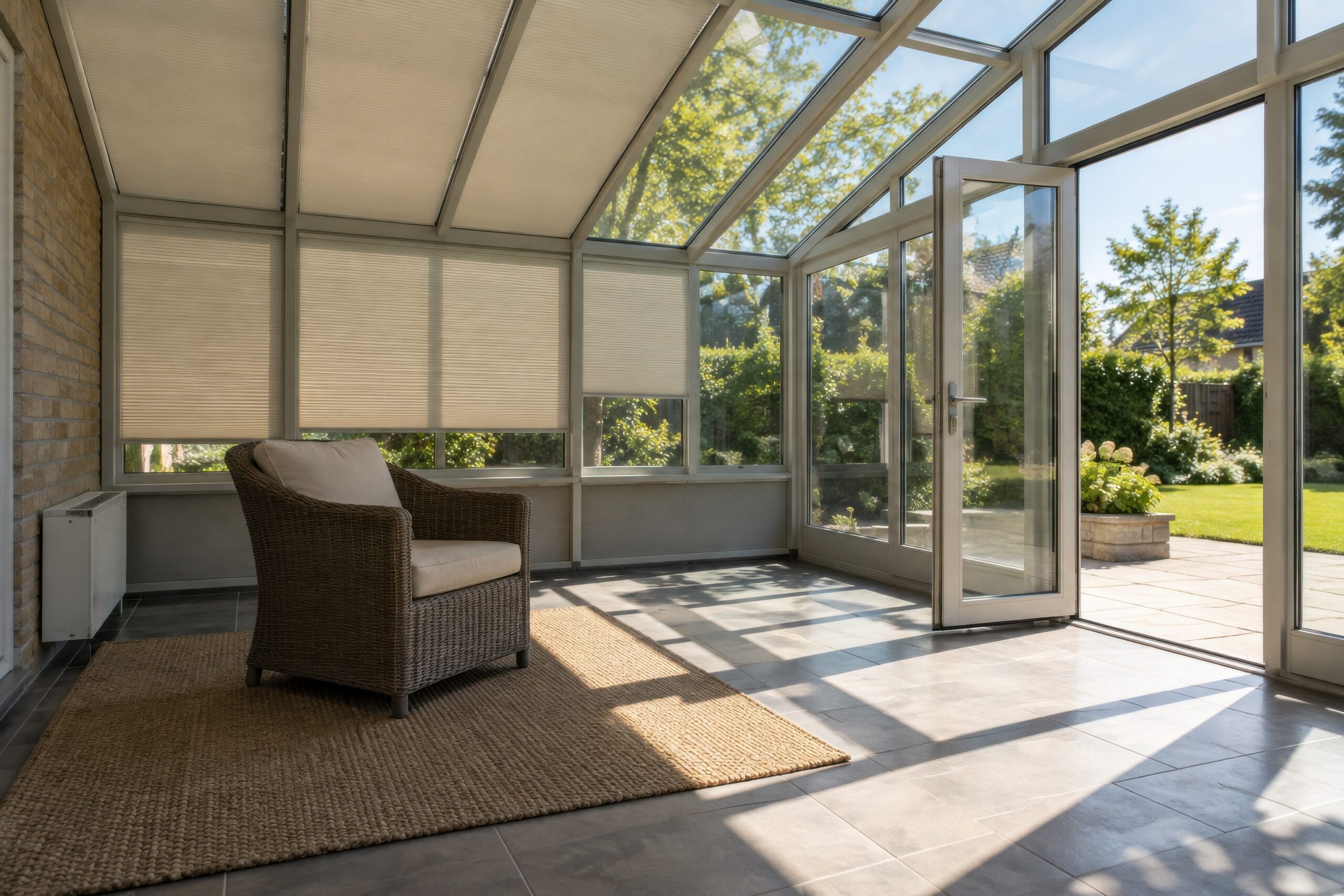
Best Blinds for Conservatories and Sunrooms: Managing Heat and Glare
A conservatory or sunroom should be somewhere you can relax and enjoy natural light. But when the sun shines directly through large windows or a glass roof, the space can quickly become too warm, uncomfortably bright or difficult to use.
Choosing the best blinds for conservatories can make a noticeable difference to everyday comfort. The right window coverings help manage sunlight, reduce glare and provide privacy without sacrificing the bright, open feeling that makes these rooms so appealing.
For many conservatories, pleated blinds are a practical option for controlling sunlight across individual glass panels. Solar-control roller blinds can help reduce glare and solar heat gain, while Venetian blinds offer adjustable light control. Motorised blinds are also worth considering for large windows and difficult-to-reach areas.
The best choice depends on your glazing, the direction your conservatory faces and how you use the space.
Effective conservatory shading balances temperature control and glare reduction while preserving natural daylight. Prioritise specific solar-control fabric properties and frame-compatible fitting to maintain year-round comfort.
Which Blinds Work Best for Conservatories and Sunrooms?
There is no single blind that suits every conservatory. However, certain styles are particularly useful for managing the combination of sunlight, heat and privacy that comes with large glazed spaces.
Here is a quick comparison.
| Blind Type | Best For | Main Consideration |
|---|---|---|
| Pleated blinds | Roof panels, shaped windows and flexible shading | Check fabric performance and fitting compatibility |
| Solar-control roller blinds | Reducing glare and unwanted solar heat gain | Fabric openness and solar performance vary |
| Venetian blinds | Adjustable daylight and privacy | Slats do not provide complete blackout |
| Perfect Fit blinds | Compatible glazed doors and window frames | Not suitable for every frame or glazing system |
| Motorised blinds | High windows, roof glazing and convenient operation | Requires compatible blinds and suitable installation |
If your conservatory becomes excessively hot, prioritise blinds with suitable solar-control properties rather than choosing purely by colour or appearance.
If glare is your biggest problem, adjustable or light-filtering blinds may provide a better balance between comfort and natural daylight.
Why Do Conservatories Get So Hot in Summer?
Conservatories are designed to let natural light enter through large areas of glazing. While this creates an attractive, open space, it also allows solar energy to enter.
Sunlight passes through the glass and warms floors, furniture and other surfaces. These surfaces then release heat into the room.
When solar heat gain is greater than the heat escaping through ventilation and glazing, temperatures can rise considerably.
Several factors influence how warm your conservatory becomes.
The Direction Your Conservatory Faces
Orientation makes a substantial difference to sunlight exposure.
A south-facing conservatory generally receives strong sunlight during much of the day, while a west-facing room may experience particularly uncomfortable afternoon and evening sun.
East-facing conservatories can become bright and warm in the morning.
North-facing spaces usually receive less direct sunlight, although glare and seasonal overheating can still occur.
Understanding when sunlight causes the most discomfort helps you choose blinds that address the problem without unnecessarily darkening the room.
The Amount and Type of Glazing
A conservatory with extensive roof glazing can experience different levels of solar heat gain from one with mainly vertical windows.
The type of glass also matters. Modern solar-control glazing can reduce incoming solar energy, whereas older glazing may offer less protection.
Blinds can improve comfort, but their effectiveness depends partly on the glazing behind them.
Limited Ventilation
Even effective blinds cannot replace adequate ventilation.
If warm air becomes trapped inside a conservatory, the room may remain uncomfortable despite the blinds being closed.
Opening suitable windows or roof vents can help release accumulated heat when outdoor conditions allow.
For conservatories that regularly overheat, the most effective approach often combines suitable blinds, ventilation and appropriate glazing.
Pleated Blinds for Conservatories: Flexible Shading for Glass Panels
Pleated blinds are worth considering when you want a neat, understated window covering that works with the structure of your conservatory.
Their fabric folds into compact pleats, allowing the blind to sit relatively discreetly when opened.
Depending on the system, pleated blinds can be suitable for vertical windows, doors and certain roof glazing arrangements.
One of their main advantages is the variety of fabrics available.
Light-Filtering Pleated Blinds
Light-filtering fabrics soften incoming daylight rather than blocking it completely.
They can be particularly useful if your conservatory is used for reading, dining or relaxing and you want to maintain a naturally bright atmosphere.
They may also help reduce uncomfortable glare without making the room feel enclosed.
Solar-Control and Thermal Pleated Fabrics
Some pleated blind fabrics are designed to improve solar control, while specialist cellular constructions can create insulating air pockets.
These properties may help moderate temperatures, although the results depend on the fabric, glazing and installation.
A useful distinction is that thermal insulation and solar heat control are not exactly the same thing.
A fabric that helps reduce heat loss during colder weather does not automatically provide the strongest protection against summer sunshine.
If overheating is your main concern, check the fabric's solar performance rather than relying on the word 'thermal' alone.
You can explore our range of pleated blinds to learn more about their styles and practical applications.
Are Roller Blinds Good for Conservatories?
Roller blinds can be an excellent choice for conservatory side windows, particularly when you want simple operation and a clean, contemporary appearance.
They work by raising or lowering a single piece of fabric, making them straightforward to adjust as sunlight changes throughout the day.
However, not all roller blind fabrics offer the same performance.
Solar-Control Roller Blinds for Heat and Glare
Solar-control fabrics are designed to manage incoming sunlight.
Depending on their construction and specification, they can reduce glare and limit some solar heat gain while allowing varying degrees of outward visibility.
This makes them useful for conservatories where you want to enjoy garden views without being exposed to harsh direct sunlight.
When comparing fabrics, pay attention to:
- Solar reflectance and transmittance, which influence how the fabric manages solar energy.
- Openness factor, which affects how much light and visibility pass through a screen fabric.
- Fabric colour and backing, which can influence glare control and solar performance.
- Suitability for the temperature and humidity conditions inside your conservatory.
A light-coloured fabric may appear cooler and brighter, but colour alone does not determine how effectively it controls heat.
Should You Choose Blackout Roller Blinds?
Blackout fabrics are useful when strong light reduction is the priority.
However, they are not necessarily the best everyday solution for a conservatory.
If you enjoy using the room during daylight hours, fully opaque blinds may make the space darker than you would like.
Blackout fabric also does not automatically provide superior solar heat control.
For most daytime living spaces, a suitable solar-control or light-filtering fabric is often a more balanced starting point.
Our roller blinds are available in different fabric styles, making it easier to compare light control and appearance.
Venetian Blinds for Adjustable Sunlight and Privacy
Venetian blinds offer a different approach to conservatory shading.
Instead of raising or lowering a continuous fabric, you can tilt their horizontal slats to adjust the amount and direction of incoming light.
This can be particularly useful in conservatories that experience changing sunlight throughout the day.
For example, if low afternoon sunshine creates glare across a dining table, adjusting the slats may reduce direct sunlight while still allowing some daylight into the room.
Venetian blinds can also provide privacy from neighbouring properties without requiring the windows to be completely covered.
Which Venetian Blind Materials Are Most Suitable?
Material selection is important because conservatories can experience considerable temperature changes and occasional condensation.
Aluminium Venetian blinds are worth considering because they are lightweight, easy to wipe clean and suitable for many contemporary interiors.
Certain faux-wood options may also be appropriate, although their suitability for high temperatures should be checked carefully.
Natural wood can be more sensitive to prolonged heat, humidity and temperature fluctuations.
Venetian blinds are particularly useful for flexible light control, but their slatted construction means they generally cannot eliminate sunlight or glare completely.
Explore our Venetian blinds for more information about the available styles and finishes.
What Are the Best Blinds for Conservatory Roofs?
Roof glazing often presents the greatest challenge when choosing conservatory blinds.
Unlike vertical windows, roof panels may be sloped, unusually shaped or positioned beyond comfortable reach.
This means the blind must be suitable for the angle of the glazing and remain properly supported when extended.
Specialist tensioned pleated systems and compatible roof blind systems can be practical options.
The most suitable solution depends on the roof construction, glazing dimensions and available fixing points.
Why Roof Blind Fitting Matters:
A standard blind designed for a vertical window may not work correctly when installed overhead. Without appropriate support, the material can sag, move unevenly or interfere with the surrounding structure.
Before selecting conservatory roof blinds, consider whether:
- The system is designed for sloping or overhead glazing.
- The roof structure provides suitable fixing points.
- Windows or ventilation panels need to remain operational.
- The fabric is appropriate for prolonged sunlight and elevated temperatures.
- The blind can be operated and cleaned safely.
Roof blinds should never obstruct essential ventilation or emergency escape arrangements.
For unusual roof shapes or large glazed areas, professional measuring and product selection are particularly important.
Can Motorised Blinds Make Conservatories More Comfortable?
Motorised blinds are worth considering when convenience and accessibility matter.
They are particularly useful for conservatories with tall windows, multiple glazed panels or blinds positioned above normal reaching height.
Rather than adjusting each blind manually, compatible motorised systems allow you to operate them using a remote control or other supported controls.
Some systems also offer scheduling or integration with compatible smart home equipment.
Managing Sunlight Throughout the Day
Imagine a west-facing sunroom that receives strong sunshine every afternoon.
Instead of waiting until the room becomes uncomfortable, scheduled blinds can close before the strongest sunlight reaches the glazing.
This can help manage glare and solar exposure more consistently.
At The Blind Store, we offer Somfy-powered motorised blind solutions, with suitable options depending on the blind type and installation requirements.
Motorisation does not automatically improve the thermal performance of a fabric, but it can make regular shading easier.
If you are considering automated window coverings, our guide to motorised versus manual blinds explains the practical differences.
How to Reduce Conservatory Heat Without Losing Natural Light
One of the biggest concerns when choosing conservatory blinds is making the room too dark.
Fortunately, effective shading does not always mean completely blocking daylight.
The key is to manage direct sunlight while retaining enough natural light for the room to remain pleasant.
It is also important to remember that internal blinds cannot prevent all solar energy from entering the glazing. Where severe overheating persists, external shading or improvements to the glazing may be worth investigating.
Choosing Conservatory Blinds for Year-Round Comfort
Although summer overheating is a common concern, conservatories can also feel cold during winter.
Large areas of glazing can lose heat more readily than well-insulated walls, particularly in older conservatories.
Certain blinds may help improve comfort by providing an additional layer between the room and the glass.
However, the effectiveness of this layer varies.
Cellular or suitably lined fabrics may offer thermal benefits, while standard light-filtering blinds may provide less insulation.
A blind should not be treated as a substitute for appropriate glazing, roof insulation or heating.
For Irish homes, where weather conditions can change considerably throughout the year, it makes sense to consider both summer sunlight and winter comfort before making a decision.
Common Mistakes to Avoid When Buying Conservatory Blinds
Choosing conservatory blinds based on appearance alone can lead to disappointing results.
A few practical checks can prevent problems later:
Assuming Every Thermal Blind Reduces Summer Heat
Thermal insulation and solar control are related but different properties.
Ask about the specific fabric's suitability for reducing solar heat gain rather than assuming all thermal fabrics perform equally well in summer.
Overlooking Conservatory Temperatures
Conservatories can become considerably warmer than other rooms.
Some materials, adhesives and blind components may be unsuitable for prolonged exposure to high temperatures.
Always check the product's operating conditions and installation requirements.
Choosing the Wrong Blind for Roof Windows
Roof glazing requires a compatible blind system.
A conventional roller or pleated blind should not be installed overhead unless the product is specifically designed and approved for that application.
Forgetting About Doors and Opening Windows
Conservatories often include patio doors, outward-opening windows and ventilation panels.
Poorly positioned blinds can interfere with handles, restrict access or prevent windows from opening fully.
Check clearances before choosing the mounting position.
Ignoring Cleaning and Maintenance
Glass-roofed rooms can collect dust, condensation and insects around window frames.
Blinds that are difficult to access or clean may become frustrating over time.
Choose a system that can be maintained safely, particularly for overhead installations.
A Practical Checklist Before You Choose
Before comparing fabrics and colours, spend a little time observing how your conservatory behaves throughout the day.
If possible, take photographs of the conservatory during the time of day when sunlight causes the greatest problem.
These can be useful when discussing suitable blinds because they show where the light enters and which parts of the room are affected.
For homeowners considering several styles, our guide to common blind-buying mistakes provides further practical advice.
Frequently Asked Questions
What Are The Best Blinds For A Hot Conservatory?
Solar-control roller blinds and suitable pleated blinds are strong options for conservatories affected by excessive sunlight. The best choice depends on the glazing, orientation and fabric's solar performance. For severe overheating, blinds may need to be combined with ventilation or additional shading.
Do Conservatory Blinds Really Keep The Heat Out?
Conservatory blinds can help reduce solar heat gain, but they do not eliminate it. Their effectiveness depends on the fabric, glazing and installation. Internal blinds generally provide less protection against incoming solar energy than appropriately designed external shading.
Are Pleated Blinds Better Than Roller Blinds For Conservatories?
Pleated blinds can be particularly useful for shaped glazing and compatible roof systems, while roller blinds offer a simple solution for many vertical windows. Neither is automatically better at reducing heat. Fabric performance and correct fitting are more important than blind style alone.
What Colour Blinds Are Best For A Conservatory?
Light-coloured blinds can help maintain a bright, open appearance. However, the most effective colour for solar control depends on the fabric construction, coatings and backing. Compare the solar performance of individual fabrics rather than choosing solely by colour.
Can You Fit Blinds To A Glass Conservatory Roof?
Yes, many conservatory roofs can accommodate specialist blind systems. However, suitability depends on the roof structure, glazing and fixing arrangements. Sloping or overhead blinds must be designed for that application and should not obstruct ventilation or other essential functions.
Are Motorised Blinds Worth It For A Conservatory?
Motorised blinds can be particularly useful for large conservatories and hard-to-reach windows. They make regular adjustments easier, and compatible systems may offer scheduled operation. Their value depends on how frequently you adjust the blinds and whether the chosen system suits your glazing.
Make Your Conservatory More Comfortable Throughout The Year
The best conservatory blinds are those that solve the problems you actually experience.
If strong sunlight makes the room too hot, prioritise suitable solar-control fabrics. If glare affects reading or watching television, consider adjustable light-filtering options. For unusual roof glazing or difficult-to-reach windows, focus on compatibility and ease of operation.
Getting the balance right can help you enjoy your conservatory or sunroom more often, without losing the natural light that makes it special.
At The Blind Store, we help homeowners compare practical window coverings for different room layouts, glazing types and everyday needs.
If you are planning to update your conservatory blinds in Limerick or the surrounding area, you are welcome to visit our showroom to explore fabrics and discuss suitable options. We also offer free consultations and fitting, helping you choose a solution that works for your windows and the way you use your space.
